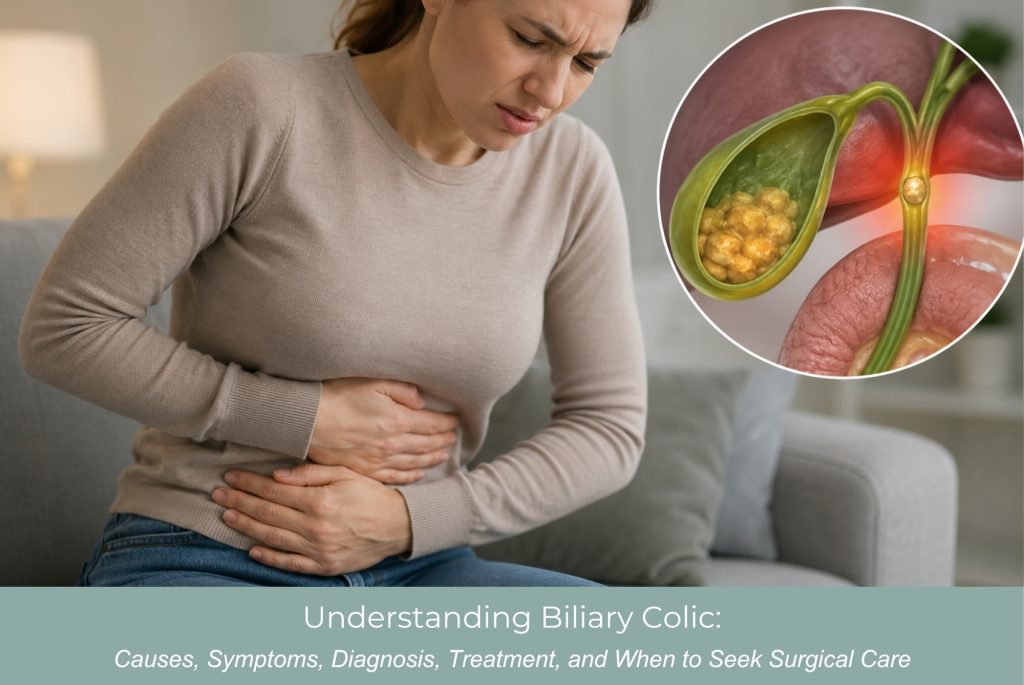
What Is Biliary Colic?
Biliary colic is one of the most common symptoms associated with gallstones and gallbladder disease. Despite the word “colic,” the pain is often steady, intense, and can be alarming. Many patients mistake biliary colic for heartburn, indigestion, acid reflux, or even a heart attack because of where the pain occurs and how severe it can become.
Biliary colic develops when a gallstone temporarily blocks the flow of bile from the gallbladder. This blockage causes increased pressure within the gallbladder, resulting in significant pain that may last anywhere from 30 minutes to several hours before resolving when the stone moves away from the blockage.
At Dr. Matthew Cooper’s surgical practice in Encinitas, California, patients receive comprehensive evaluation and evidence-based surgical care for gallbladder disorders, including biliary colic, gallstones, and acute or chronic gallbladder disease. Early diagnosis and treatment can prevent serious complications and significantly improve quality of life.
Understanding the Gallbladder and Its Function
The gallbladder is a small, pear-shaped organ located beneath the liver on the right side of the abdomen. Although relatively small, it plays an important role in digestion.
The gallbladder stores and concentrates bile, a digestive fluid produced by the liver. After eating—especially meals containing fat—the gallbladder contracts and releases bile into the small intestine, where it helps digest dietary fats.
When gallstones interfere with this normal process, painful symptoms can occur.
What Causes Biliary Colic?
The overwhelming majority of biliary colic cases are caused by gallstones (cholelithiasis).
Gallstones form when substances normally found in bile become imbalanced and crystallize over time. These stones may remain silent for years or suddenly begin causing symptoms.
When the gallbladder contracts after a meal, a gallstone may temporarily lodge within the cystic duct—the passageway connecting the gallbladder to the bile ducts. The resulting obstruction creates pressure within the gallbladder, leading to biliary colic.
Once the stone moves, bile flow resumes, and the pain typically subsides.
Risk Factors for Gallstones
Several factors increase the likelihood of developing gallstones, including:
- Female sex
- Age over 40
- Obesity
- Rapid weight loss
- Pregnancy
- Family history of gallstones
- Diabetes
- High-fat or high-cholesterol diets
- Metabolic syndrome
- Certain medications
- Liver disease
- Increasing age
While these risk factors are common, biliary colic can occur in otherwise healthy individuals as well.
Common Symptoms of Biliary Colic
The hallmark symptom is sudden upper abdominal pain.
Symptoms may include:
- Severe pain in the upper right abdomen
- Pain in the upper middle abdomen (epigastric region)
- Pain radiating into the right shoulder or shoulder blade
- Pain occurring after eating fatty meals
- Episodes that begin suddenly
- Nausea
- Vomiting
- Sweating during painful attacks
- Feeling bloated after meals
- Indigestion
Unlike heartburn, biliary colic usually does not improve with antacids.
Episodes often occur during the evening or nighttime after eating a large meal.
What Does Biliary Colic Feel Like?
Patients frequently describe biliary colic as:
- Sharp
- Deep
- Cramping
- Squeezing
- Pressure-like
- Constant rather than intermittent
- Severe enough to interrupt daily activities
The pain generally lasts between 30 minutes and six hours before gradually resolving.
Foods That Can Trigger Symptoms
Although symptoms may occur at any time, certain foods commonly trigger gallbladder contractions, including:
- Fried foods
- Pizza
- Cheeseburgers
- Bacon
- Sausage
- Butter
- Cream sauces
- Ice cream
- Rich desserts
- Full-fat dairy products
- Fast food
Reducing dietary fat may decrease symptom frequency, but dietary changes alone do not eliminate gallstones.
How Is Biliary Colic Diagnosed?
Diagnosis begins with a detailed medical history and physical examination.
Dr. Matthew Cooper carefully evaluates:
- Pain location
- Timing of symptoms
- Relationship to meals
- Previous episodes
- Family history
- Associated symptoms
Diagnostic testing may include:
Abdominal Ultrasound
Ultrasound is considered the first-line imaging study for gallstones.
It can identify:
- Gallstones
- Gallbladder inflammation
- Gallbladder wall thickening
- Bile duct enlargement
Blood Tests
Blood work helps evaluate for:
- Infection
- Liver dysfunction
- Pancreatitis
- Bile duct obstruction
HIDA Scan
A hepatobiliary iminodiacetic acid (HIDA) scan evaluates gallbladder function and can identify poor gallbladder emptying or cystic duct obstruction.
CT Scan or MRI
Advanced imaging may be recommended when additional evaluation is necessary or complications are suspected.
Conditions That Can Mimic Biliary Colic
Several medical conditions may produce similar symptoms, including:
- Acid reflux (GERD)
- Peptic ulcer disease
- Gastritis
- Pancreatitis
- Liver disease
- Kidney stones
- Irritable bowel syndrome
- Heart attack
- Pneumonia
- Musculoskeletal chest wall pain
Proper diagnosis is essential to ensure appropriate treatment.
When Does Biliary Colic Become an Emergency?
Although biliary colic itself often resolves, persistent blockage can lead to serious complications requiring emergency treatment.
Seek immediate medical attention if symptoms include:
- Pain lasting longer than six hours
- Fever
- Chills
- Yellowing of the skin or eyes (jaundice)
- Persistent vomiting
- Severe abdominal tenderness
- Dark urine
- Pale-colored stools
- Difficulty breathing
- Chest pain
These symptoms may indicate:
- Acute cholecystitis
- Cholangitis
- Gallstone pancreatitis
- Common bile duct obstruction
Prompt treatment can prevent life-threatening complications.
Treatment Options for Biliary Colic
Treatment depends on symptom severity, imaging findings, and the patient’s overall health.
Conservative Management
For initial mild episodes, recommendations may include:
- Low-fat diet
- Hydration
- Pain medications
- Monitoring symptoms
However, once biliary colic develops, additional attacks are common.
Laparoscopic Gallbladder Removal (Laparoscopic Cholecystectomy)
The definitive treatment for symptomatic gallstones is surgical removal of the gallbladder.
Laparoscopic cholecystectomy is considered the gold standard and is one of the most commonly performed general surgical procedures worldwide.
Benefits include:
- Minimally invasive approach
- Smaller incisions
- Less postoperative pain
- Faster recovery
- Lower infection risk
- Shorter hospital stay
- Excellent long-term outcomes
Many patients return home the same day.
What Happens During Gallbladder Surgery?
During laparoscopic surgery, several tiny incisions are made in the abdomen.
Using specialized instruments and a high-definition camera, Dr. Matthew Cooper carefully removes the gallbladder while preserving surrounding structures.
The procedure generally takes less than one hour, although individual cases vary.
Recovery After Gallbladder Surgery
Most patients recover quickly.
Recovery typically includes:
- Walking the day of surgery
- Returning to light activity within several days
- Gradually resuming normal eating
- Returning to work within one to two weeks, depending on occupation
- Temporary dietary adjustments during healing
Most individuals experience significant improvement in their symptoms after surgery.
Can You Live Without a Gallbladder?
Yes.
The liver continues producing bile after gallbladder removal.
Instead of being stored in the gallbladder, bile flows directly into the small intestine.
Most people digest food normally and experience little or no long-term dietary restrictions.
Preventing Gallstones
Although gallstones cannot always be prevented, healthy lifestyle choices may reduce risk.
Helpful strategies include:
- Maintaining a healthy weight
- Losing weight gradually
- Eating a balanced, fiber-rich diet
- Limiting saturated fats
- Exercising regularly
- Managing diabetes
- Staying well hydrated
Why Early Evaluation Matters
Ignoring recurring biliary colic increases the risk of complications such as infection, pancreatitis, and bile duct obstruction.
Patients who experience repeated episodes often benefit from early surgical consultation before emergency surgery becomes necessary.
Timely evaluation allows for elective treatment, which is generally associated with smoother recovery and fewer complications than emergency intervention.
Frequently Asked Questions About Biliary Colic
What is biliary colic?
Biliary colic is pain caused by a temporary blockage of the gallbladder outlet by a gallstone, leading to increased pressure inside the gallbladder.
Is biliary colic always caused by gallstones?
Most cases are caused by gallstones, although gallbladder dysfunction without stones can produce similar symptoms.
How long does biliary colic last?
Episodes usually last between 30 minutes and six hours before resolving.
Can biliary colic go away on its own?
The pain often subsides when the stone moves away from the duct, but the underlying gallstones remain and future attacks are common.
What foods trigger biliary colic?
Fatty foods such as fried foods, pizza, burgers, butter, cheese, and creamy sauces commonly trigger symptoms.
Can medications dissolve gallstones?
Certain medications may dissolve a small number of cholesterol gallstones over many months, but they are appropriate only in select cases and recurrence is common. Surgery remains the standard treatment for symptomatic gallstones.
Will I need surgery?
Patients with recurrent biliary colic or symptomatic gallstones are often advised to undergo laparoscopic gallbladder removal to prevent future attacks and complications.
Is gallbladder surgery safe?
Laparoscopic cholecystectomy is considered a safe, well-established procedure when performed by an experienced general surgeon. As with any surgery, individual risks and benefits should be discussed during consultation.
How long is recovery?
Many patients return to normal daily activities within one to two weeks, depending on the nature of their work and overall health.
Can gallstones return after surgery?
No. Once the gallbladder is removed, gallstones within the gallbladder cannot recur. Rarely, stones can form within the bile ducts, but this is uncommon.
When should I seek emergency care?
Seek immediate medical attention if you experience severe pain lasting more than six hours, fever, jaundice, persistent vomiting, or signs of infection.
Schedule a Consultation with Dr. Matthew Cooper
If you are experiencing recurring upper abdominal pain, especially after eating, don’t ignore the symptoms. Early evaluation can help identify gallbladder disease before serious complications develop. Dr. Matthew Cooper provides compassionate, patient-centered surgical care using modern minimally invasive techniques to help patients return to their normal lives as safely and efficiently as possible.
Dr. Matthew Cooper
303 Santa Fe Dr.
Encinitas, CA 92024
Phone: (760) 635-9185
Website: https://encinitassurgical.com
Schedule a Consultation: https://encinitassurgical.com/appointments/