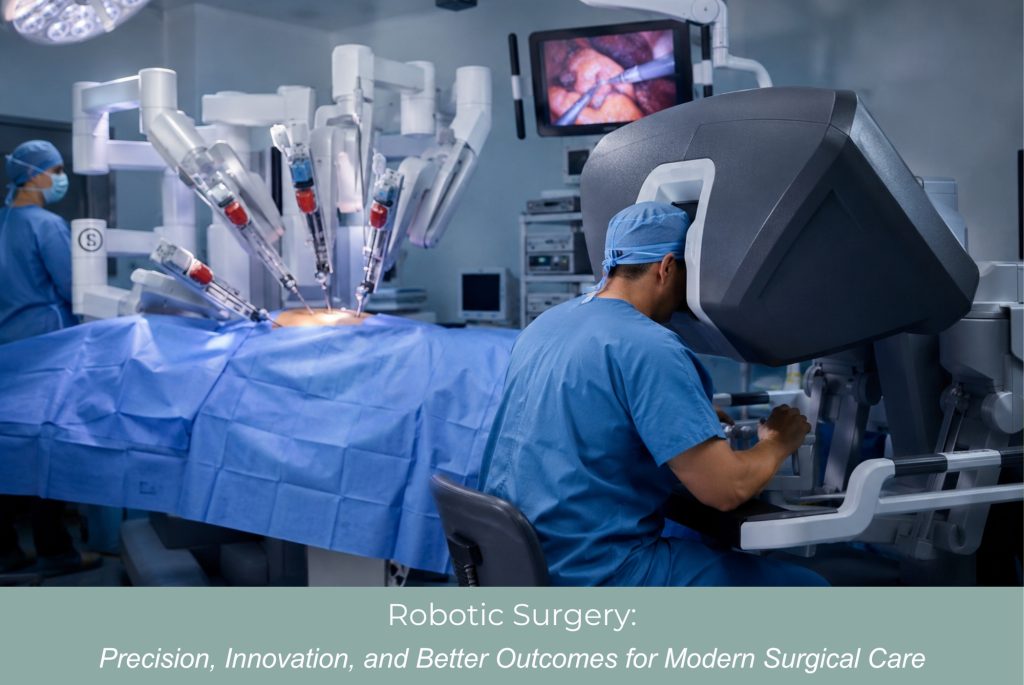
Understanding Robotic Surgery: How Advanced Technology Is Transforming Surgical Procedures
Robotic surgery has revolutionized the way many surgical procedures are performed, offering patients greater precision, smaller incisions, and often a faster recovery compared to traditional open surgery. While the term “robotic surgery” may sound futuristic, it is important to understand that the robotic system never operates independently. Every movement is fully controlled by an experienced, highly trained surgeon.
Dr. Matthew Cooper utilizes advanced minimally invasive surgical techniques, including robotic-assisted surgery when appropriate, to help patients receive safe, effective treatment with improved surgical precision. Robotic-assisted procedures have become an important option for treating many abdominal and gastrointestinal conditions while minimizing disruption to healthy tissue.
If you have been told you need surgery, learning about robotic-assisted techniques can help you make an informed decision about your treatment options.
What Is Robotic Surgery?
Robotic surgery, also known as robot-assisted surgery or robotic-assisted minimally invasive surgery, is an advanced surgical technique that combines the expertise of a skilled surgeon with sophisticated robotic technology.
During surgery, the surgeon sits at a specialized console within the operating room and controls robotic instruments that translate hand movements into highly precise movements inside the patient’s body.
The robotic system includes:
- A high-definition 3D camera
- Miniature surgical instruments with enhanced flexibility
- Advanced motion control technology
- Magnified visualization of delicate anatomy
- Tremor filtration for improved precision
Rather than standing over the patient, the surgeon controls every movement while viewing the surgical field in exceptional detail.
The Surgeon Is Always in Complete Control
One of the biggest misconceptions about robotic surgery is that the robot performs the operation independently.
This is completely false.
The robotic platform does not make decisions or perform surgery on its own. Instead, it serves as a highly advanced extension of the surgeon’s hands.
The surgeon controls:
- Every incision
- Every movement
- Every instrument
- Every surgical decision
- Every aspect of the procedure
The technology simply enhances the surgeon’s ability to operate with exceptional precision.
Conditions Commonly Treated with Robotic Surgery
Many general surgical procedures can now be performed robotically depending on the patient’s condition and overall health.
Common robotic procedures include:
Gallbladder Removal (Cholecystectomy)
Robotic-assisted gallbladder surgery is frequently performed for:
- Gallstones
- Chronic gallbladder inflammation
- Biliary colic
- Gallbladder dysfunction
Hernia Repair
Robotic surgery is commonly used for repairing:
- Inguinal hernias
- Umbilical hernias
- Ventral hernias
- Incisional hernias
- Recurrent hernias
Colon Surgery
Patients with certain colorectal conditions may benefit from robotic-assisted procedures for:
- Diverticulitis
- Colon cancer
- Large colon polyps
- Inflammatory bowel disease
- Bowel obstruction
Gastrointestinal Surgery
Robotic surgery may also be used for selected procedures involving:
- Small intestine
- Stomach
- Appendix
- Abdominal wall reconstruction
How Robotic Surgery Works
Robotic surgery involves several small incisions rather than one large incision used in traditional open surgery.
The procedure generally follows these steps:
- The patient receives general anesthesia.
- Several small incisions are created.
- Tiny surgical instruments are inserted.
- A high-definition camera provides a magnified 3D view.
- The surgeon controls the robotic system from the console.
- The procedure is completed with exceptional accuracy.
- The small incisions are closed.
This minimally invasive approach often results in significantly less trauma to surrounding tissues.
Benefits of Robotic Surgery
Robotic-assisted surgery offers numerous advantages for appropriately selected patients.
Smaller Incisions
Smaller incisions typically mean:
- Less tissue damage
- Less postoperative pain
- Smaller scars
- Improved cosmetic outcomes
Greater Surgical Precision
Robotic instruments can perform movements beyond the capabilities of the human wrist.
This enhanced dexterity allows surgeons to work carefully around delicate structures such as:
- Blood vessels
- Nerves
- Organs
- Connective tissue
Enhanced Visualization
The robotic camera provides:
- High-definition imaging
- Three-dimensional magnification
- Better depth perception
- Improved identification of important anatomy
This visualization can improve surgical accuracy.
Reduced Blood Loss
Because robotic surgery allows for highly controlled movements, many procedures involve less bleeding compared to traditional surgery.
Patients may experience:
- Lower risk of transfusion
- Better surgical visibility
- Reduced postoperative bruising
Lower Risk of Infection
Smaller incisions generally reduce the amount of exposed tissue, which may decrease infection risk.
Faster Recovery
Many patients experience:
- Earlier walking
- Quicker return to normal eating
- Shorter hospital stays
- Faster return to work
- Earlier return to daily activities
Recovery time varies depending on the procedure and individual health.
Robotic Surgery Versus Traditional Open Surgery
Traditional open surgery requires a larger incision to provide direct access to the surgical area.
Robotic surgery instead uses:
- Small ports
- High-definition cameras
- Specialized instruments
- Advanced visualization
While open surgery remains the best option in some complex situations, robotic surgery can provide substantial advantages for many patients.
Robotic Surgery Versus Standard Laparoscopic Surgery
Both robotic and laparoscopic surgery are minimally invasive.
However, robotic surgery offers several technological improvements.
Laparoscopic Surgery
- Two-dimensional camera
- Limited instrument movement
- Manual instrument control
- Excellent minimally invasive option
Robotic Surgery
- Three-dimensional high-definition visualization
- Wristed instruments with greater flexibility
- Enhanced precision
- Improved ergonomics for the surgeon
- Better maneuverability in confined spaces
For many complex procedures, robotic technology provides additional surgical advantages.
Who Is a Candidate for Robotic Surgery?
Many patients may qualify for robotic-assisted surgery.
Factors considered include:
- Overall health
- Body mass index
- Previous surgeries
- Type of medical condition
- Severity of disease
- Surgical goals
Not every patient is an ideal candidate, and Dr. Matthew Cooper will determine whether robotic surgery is the safest and most effective option.
Preparing for Robotic Surgery
Preparation typically includes:
- Medical evaluation
- Imaging studies
- Blood work
- Medication review
- Instructions regarding eating and drinking
- Smoking cessation recommendations
- Discussion of anesthesia
Patients should also arrange transportation and help at home following surgery.
What to Expect After Robotic Surgery
Recovery varies depending on the procedure performed.
Many patients experience:
- Less pain than expected
- Earlier mobility
- Shorter hospitalization
- Small incision care
- Gradual return to activity
Dr. Cooper provides individualized postoperative instructions to promote optimal healing.
Is Robotic Surgery Safe?
Robotic-assisted surgery has been extensively studied and is considered safe when performed by trained surgeons using appropriate patient selection.
The technology has been used in millions of procedures worldwide and continues to improve patient outcomes across multiple surgical specialties.
As with any surgery, risks may include:
- Bleeding
- Infection
- Blood clots
- Injury to nearby structures
- Anesthesia complications
Your surgeon will discuss these risks in detail before surgery.
Why Choose Dr. Matthew Cooper?
Choosing the right surgeon is one of the most important healthcare decisions you can make.
Dr. Matthew Cooper combines extensive surgical expertise with advanced minimally invasive techniques to provide personalized care for patients throughout Encinitas and the surrounding communities.
Patients appreciate:
- Comprehensive surgical evaluations
- Individualized treatment recommendations
- Advanced robotic-assisted surgical options
- Compassionate patient-centered care
- Commitment to safety
- Focus on faster recovery whenever possible
Whether you need gallbladder surgery, hernia repair, or another general surgical procedure, Dr. Cooper will work closely with you to determine the most appropriate treatment plan.
Frequently Asked Questions About Robotic Surgery
Is robotic surgery actually performed by a robot?
No. The surgeon controls every movement of the robotic system throughout the procedure. The robot does not make decisions or operate independently.
Is robotic surgery better than traditional surgery?
For many procedures, robotic surgery offers benefits such as smaller incisions, less pain, quicker recovery, and improved precision. However, the best approach depends on your individual condition.
Does robotic surgery hurt less?
Many patients report less postoperative discomfort compared to open surgery because the incisions are much smaller.
How long does robotic surgery take?
Procedure length varies depending on the operation being performed. Your surgeon will discuss expected surgical time during your consultation.
Will I have large scars?
Most robotic procedures require only several small incisions, resulting in significantly smaller scars than traditional open surgery.
How long is recovery?
Many patients recover more quickly than with open surgery, although recovery depends on the type of operation and overall health.
Is robotic surgery covered by insurance?
Most medically necessary robotic-assisted procedures are covered by insurance plans similarly to other surgical techniques. Coverage varies by provider and policy.
Can older adults have robotic surgery?
Yes. Many older adults are excellent candidates if they are medically appropriate for minimally invasive surgery.
Are there risks associated with robotic surgery?
Like any surgical procedure, robotic surgery carries potential risks. Your surgeon will review the benefits and risks based on your individual health and procedure.
How do I know if I’m a candidate?
The best way to determine whether robotic-assisted surgery is right for you is to schedule a consultation with Dr. Matthew Cooper for a comprehensive evaluation.
Contact Dr. Matthew Cooper
Dr. Matthew Cooper
303 Santa Fe Dr.
Encinitas, CA 92024
Phone: (760) 635-9185
Website: https://encinitassurgical.com
Schedule a Consultation:
https://encinitassurgical.com/appointments/