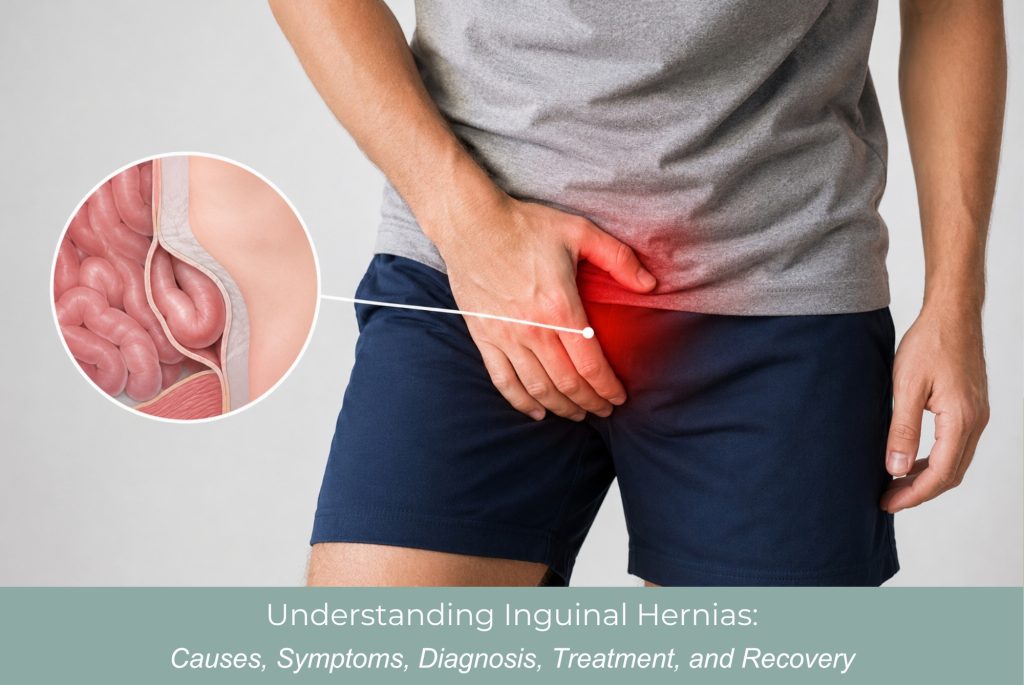
What Is an Inguinal Hernia?
An inguinal hernia is one of the most common types of hernias, affecting millions of people worldwide each year. It occurs when tissue—often a portion of the intestine or fatty abdominal tissue—pushes through a weakened area or opening in the lower abdominal wall near the groin. While inguinal hernias can occur in both men and women, they are significantly more common in men due to differences in anatomy.
Although some inguinal hernias may initially cause little discomfort, they typically do not heal on their own. Without appropriate evaluation and treatment, they can gradually enlarge and increase the risk of complications, including incarceration and strangulation, which may require emergency surgery.
Dr. Matthew Cooper, a board-certified General Surgeon in Encinitas, California, specializes in evaluating and treating inguinal hernias using modern surgical techniques designed to provide excellent outcomes while minimizing recovery time.
What Is an Inguinal Hernia?
The inguinal canal is a natural passageway located in the lower abdomen near the groin. In an inguinal hernia, abdominal contents protrude through a weakened portion of this area, creating a visible or palpable bulge.
There are two primary types of inguinal hernias:
Indirect Inguinal Hernia
This is the most common type and often develops due to a congenital weakness that exists from birth. Although present early in life, symptoms may not appear until adulthood.
Direct Inguinal Hernia
A direct inguinal hernia develops over time due to weakening of the abdominal wall muscles, often associated with aging, repetitive physical strain, or increased abdominal pressure.
Both types are treated similarly once they become symptomatic.
How Common Are Inguinal Hernias?
Inguinal hernias account for approximately 75% of all abdominal wall hernias. They occur much more frequently in men than women and become increasingly common with age.
Risk factors include:
- Male gender
- Family history of hernias
- Aging
- Chronic coughing
- Smoking
- Obesity
- Heavy lifting
- Chronic constipation
- Frequent straining during urination
- Previous abdominal surgery
- Pregnancy (less common)
What Causes an Inguinal Hernia?
An inguinal hernia develops when pressure inside the abdomen exceeds the strength of the surrounding muscles and connective tissues.
Common contributing factors include:
Weak Abdominal Muscles
Some individuals are born with naturally weaker tissue in the groin, while others develop weakness over time due to aging.
Increased Abdominal Pressure
Activities and conditions that repeatedly increase abdominal pressure include:
- Heavy lifting
- Chronic coughing
- Persistent constipation
- Enlarged prostate causing straining
- Obesity
- Pregnancy
- Frequent strenuous exercise
Usually, several factors combine to produce a hernia rather than a single event.
Common Symptoms of an Inguinal Hernia
Symptoms vary depending on the size of the hernia and whether complications have developed.
Common symptoms include:
Visible Groin Bulge
A soft bulge near the groin is often the earliest sign. It may become more noticeable while standing, coughing, or lifting heavy objects.
Groin Pain or Pressure
Patients often describe:
- Dull aching
- Burning sensation
- Pulling discomfort
- Pressure in the groin
Symptoms frequently worsen after prolonged standing or physical activity.
Pain During Physical Activity
Exercise, lifting, bending, coughing, or sneezing may increase discomfort.
Feeling of Weakness
Some patients describe a sensation that something is “giving way” in the groin.
Scrotal Swelling
In men, larger hernias may extend into the scrotum, causing swelling and discomfort.
When Does an Inguinal Hernia Become an Emergency?
While many hernias are not immediately dangerous, certain symptoms require urgent medical attention.
Seek emergency care immediately if you experience:
- Sudden severe pain
- A bulge that cannot be pushed back in
- Redness over the hernia
- Fever
- Nausea or vomiting
- Abdominal distention
- Inability to pass gas or have a bowel movement
These symptoms may indicate incarceration or strangulation, where the blood supply to the trapped intestine becomes compromised.
How Is an Inguinal Hernia Diagnosed?
Diagnosis usually begins with a thorough medical history and physical examination.
During the examination, Dr. Matthew Cooper may ask patients to:
- Stand
- Cough
- Strain gently
- Change positions
These maneuvers help identify the hernia.
Imaging Studies
Although many hernias are diagnosed during the physical exam, imaging may be recommended when the diagnosis is uncertain.
Possible imaging studies include:
- Ultrasound
- CT scan
- MRI
These tests help evaluate the size of the hernia and identify other potential causes of groin pain.
Treatment Options for Inguinal Hernias
The appropriate treatment depends on symptoms, overall health, activity level, and hernia size.
Watchful Waiting
Small hernias that produce little or no discomfort may sometimes be monitored carefully.
However, hernias generally enlarge over time and will not heal without surgery.
Surgical Repair
Surgery remains the only definitive treatment for an inguinal hernia.
Modern surgical repair offers excellent success rates and can significantly reduce pain while restoring normal anatomy.
Surgical Techniques for Inguinal Hernia Repair
Several surgical approaches are available.
Open Hernia Repair
During open repair:
- A small incision is made in the groin.
- The protruding tissue is returned to the abdomen.
- The weakened muscle is reinforced, often using surgical mesh.
Open surgery remains an excellent option for many patients.
Laparoscopic Hernia Repair
Laparoscopic surgery uses several very small incisions and specialized instruments equipped with a miniature camera.
Potential benefits include:
- Smaller incisions
- Less postoperative discomfort
- Reduced scarring
- Faster return to activities
- Treatment of hernias on both sides during the same procedure
Robotic-Assisted Hernia Repair
Robotic-assisted surgery is an advanced minimally invasive technique that provides enhanced precision, visualization, and dexterity for the surgeon.
Potential advantages may include:
- Exceptional visualization
- Precise tissue handling
- Small incisions
- Less postoperative pain
- Faster recovery for many patients
Dr. Matthew Cooper will recommend the most appropriate surgical approach based on each patient’s individual condition and medical history.
Is Surgical Mesh Safe?
Modern surgical mesh has become the standard reinforcement material for most inguinal hernia repairs.
Mesh helps:
- Strengthen weakened tissue
- Reduce tension on repairs
- Lower recurrence rates
- Improve long-term durability
Not every patient requires the same technique, and treatment recommendations are individualized after a comprehensive evaluation.
Recovery After Inguinal Hernia Surgery
Recovery varies depending on the surgical technique and individual patient.
Many patients experience:
- Walking the day of surgery
- Mild soreness for several days
- Return to office work within one to two weeks
- Gradual increase in activity
- Return to heavy lifting after surgeon approval
Most patients notice steady improvement over the first several weeks.
Following postoperative instructions carefully helps reduce complications and supports optimal healing.
Can an Inguinal Hernia Come Back?
Although modern surgical techniques have significantly reduced recurrence rates, no repair completely eliminates the possibility of recurrence.
Factors that may increase recurrence include:
- Smoking
- Obesity
- Heavy lifting too soon
- Chronic coughing
- Poor wound healing
- Connective tissue disorders
Maintaining a healthy weight, avoiding tobacco, and following activity restrictions help maximize long-term success.
Preventing Future Hernias
Although congenital weakness cannot be prevented, healthy lifestyle habits may reduce strain on the abdominal wall.
Helpful strategies include:
- Maintain a healthy weight
- Exercise regularly
- Strengthen core muscles appropriately
- Lift properly using your legs
- Avoid smoking
- Treat chronic cough
- Prevent constipation
- Manage enlarged prostate symptoms
- Follow postoperative instructions carefully
Why Choose Dr. Matthew Cooper for Inguinal Hernia Treatment?
Choosing an experienced general surgeon is an important step toward achieving excellent outcomes.
Dr. Matthew Cooper provides individualized surgical care focused on:
- Comprehensive evaluations
- Accurate diagnosis
- Advanced surgical techniques
- Personalized treatment recommendations
- Compassionate patient education
- Safe, evidence-based care
- Excellent postoperative follow-up
Every patient receives a treatment plan tailored to their lifestyle, symptoms, and long-term health goals.
Frequently Asked Questions About Inguinal Hernias
Can an inguinal hernia heal without surgery?
No. Once a hernia develops, it does not repair itself. Surgery is the only definitive treatment.
Is every inguinal hernia painful?
No. Some patients experience only a visible bulge with little discomfort, while others develop significant pain during activity.
What happens if I ignore an inguinal hernia?
Most hernias gradually enlarge over time and carry an increasing risk of incarceration or strangulation, which may require emergency surgery.
Is laparoscopic surgery better than open surgery?
Both approaches are effective. The best option depends on factors such as your anatomy, previous surgeries, overall health, and the characteristics of your hernia.
Will I need surgical mesh?
Many patients benefit from mesh reinforcement because it reduces recurrence rates, but recommendations vary depending on the individual case.
How long does surgery take?
Most uncomplicated inguinal hernia repairs are completed in approximately one to two hours, depending on the complexity of the repair.
Will I have a large scar?
Minimally invasive procedures typically leave several very small scars, while open surgery results in one larger incision in the groin.
How soon can I return to work?
Many patients return to desk work within one to two weeks. Jobs involving heavy physical labor may require additional recovery time.
Can I exercise after surgery?
Walking is encouraged shortly after surgery. More strenuous activities should only be resumed after clearance from your surgeon.
When should I schedule an evaluation?
You should schedule an evaluation if you notice a groin bulge, persistent discomfort, or pain with lifting, coughing, or exercise. Early diagnosis allows for timely treatment and may help prevent complications.
Schedule a Consultation with Dr. Matthew Cooper
If you are experiencing groin pain, a noticeable bulge, or suspect you may have an inguinal hernia, early evaluation can help prevent complications and provide peace of mind. Dr. Matthew Cooper offers expert diagnosis and personalized surgical treatment options for patients throughout Encinitas and the surrounding communities.
Dr. Matthew Cooper
303 Santa Fe Dr.
Encinitas, CA 92024
Phone: (760) 635-9185
Website: encinitassurgical.com
Schedule a Consultation: https://encinitassurgical.com/appointments/